


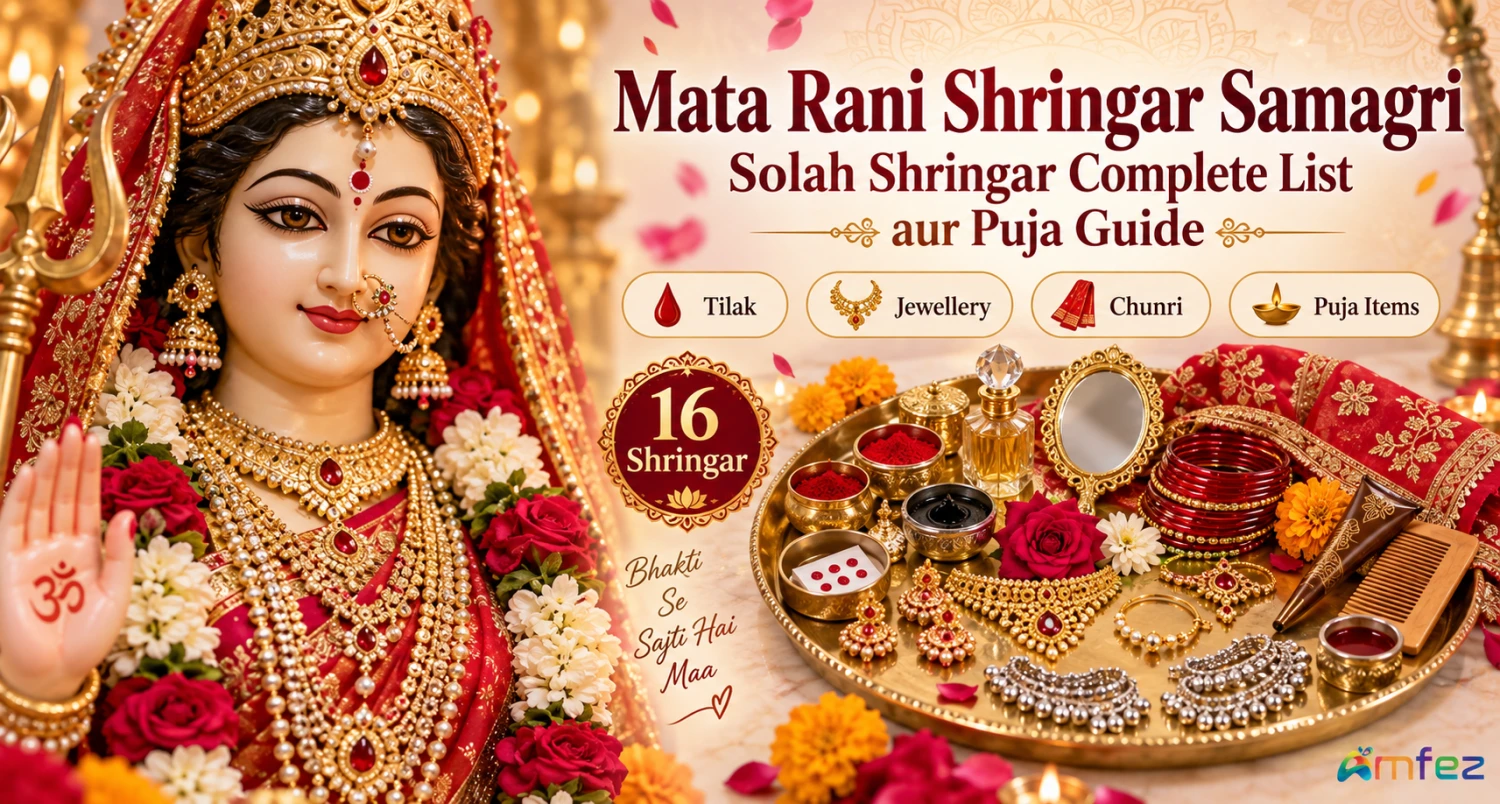
Shringar is more than decoration. In Shakti worship, adorning Mata Rani is a form of devotion as serious as mantra, as complete as havan. The act of placing each shringar item — the maang tikka, the nath, the bangles, the bindi — is itself a puja.
This guide covers the complete Mata Rani shringar samagri list — what each item is, why it matters, and how to offer it as part of your daily or Navratri puja.
Chunri · Bindi/Tilak · Maang Tikka · Nath (nose ring) · Earrings · Bangles · Haar (necklace) · Kamarband (waist chain) · Payal (anklets) · Mehendi (henna) · Sindoor · Alta (red lac dye for feet) · Kohl/Kajal · Flowers for hair · Shringar box (solah shringar)
What is Mata Rani Shringar and Why is it Offered?
Shringar literally means adornment or beautification. In the Hindu tradition of Devi worship (Shaktism), Mata Rani is adorned in the same way a bride is adorned — with all sixteen traditional adornments called Solah Shringar. Offering shringar to Mata is considered one of the highest forms of seva (service) because it requires the devotee's full attention, care, and love.
During Navratri, the shringar is part of the daily puja vidhi — Mata's murti or photo is dressed in the day's poshak and then adorned with shringar items appropriate to her form. The more careful and intentional the shringar, the more complete the puja.
Complete Mata Rani Shringar Samagri List — All 16 Items
| # | Shringar Item | Placement | Significance |
|---|---|---|---|
| 1 | Chunri / Dupatta | Head and shoulders | Divine covering — first shringar offered |
| 2 | Sindoor | Maang (hair parting) | Symbol of Shakti and divine power |
| 3 | Bindi / Kumkum | Forehead (third eye) | Activates the Ajna chakra — seat of divine vision |
| 4 | Maang Tikka | Centre parting to forehead | Crown jewel — marks divine royalty |
| 5 | Nath (nose ring) | Nose (left nostril) | Traditional symbol of divine feminine beauty |
| 6 | Earrings (Kundal) | Ears | Represent receptivity — Mata hears all prayers |
| 7 | Haar (necklace) | Neck and chest | Most visible shringar — marks divine status |
| 8 | Bangles (Chudiyaan) | Wrists | Sound of bangles = Mata's presence in the home |
| 9 | Kamarband (waist chain) | Waist | Marks the centre of Mata's divine form |
| 10 | Payal (anklets) | Ankles | Sound of anklets = divine footstep entering home |
| 11 | Alta (red lac dye) | Feet | Sacred red feet — marks the ground as blessed |
| 12 | Kajal / Kohl | Eyes | Intensifies Mata's divine gaze |
| 13 | Flowers in hair (Gajra) | Hair bun or braid | Fresh fragrance in the puja space |
| 14 | Poshak (dress) | Full body | Changes daily — the most visible devotional act |
| 15 | Attar / Perfume | Offered near Mata (not on idol directly) | Divine fragrance purifies puja space |
| 16 | Crown / Mukut | Head | Most sacred — marks Mata as queen of the universe |
Which Shringar Items Are Most Important for Navratri Puja?
If doing the complete Solah Shringar is not possible, focus on these five most important items for Navratri:
- Chunri — offered first, before any other shringar. A red or yellow chunri draped over Mata is the most fundamental offering
- Sindoor — applied to Mata's maang with a tilak brush or fingertip. Use sindoor (vermillion), not just kumkum
- Poshak — the day's colour (see the 9 roop poshak guide)
- Haar (necklace) — flowers or a simple marigold haar around Mata's neck
- Bindi — red kumkum applied at the third eye (forehead centre)
Browse the complete Durga Ji poshak collection — the first and most important shringar of each Navratri day.
माँ दुर्गा का श्रृंगार कैसे करें?
माँ दुर्गा का श्रृंगार पहले चुनरी ओढ़ाने से शुरू होता है। फिर सिंदूर मांग में, बिंदी माथे पर, माला गले में, चूड़ियाँ कलाई पर, पायल पैरों में। पोशाक उस दिन के रंग की। पूजा के बाद कज्जल, अत्तर और फूल अर्पित करें। श्रृंगार में जितना ध्यान, उतनी ही पूजा पूर्ण।
नवरात्रि 2026 (11–19 अक्टूबर) में पूरे 9 दिन का श्रृंगार करने के लिए सभी 9 रंगों की पोशाक Amfez पर ₹199 से उपलब्ध है।
Frequently Asked Questions — Mata Rani Shringar
Q: Can we offer shringar to Mata Rani daily, not just on Navratri?
A: Yes — daily shringar is considered the highest form of Devi seva. Even a simple offering of sindoor, bindi, and a fresh flower each morning counts as shringar. You don't need all sixteen items every day. Consistency matters more than completeness.
Q: Should the poshak be offered before or after the aarti?
A: The poshak and shringar are offered at the beginning of the puja — before the bhog and before the aarti. The sequence is: clean the mandir → dress Mata (poshak + shringar) → offer flowers → offer bhog → perform aarti.
Q: Can we reuse the shringar items (bangles, necklace) day after day?
A: Yes. Silver or gold-coloured mandir shringar sets are reused. What changes daily is the poshak (cloth), the sindoor application (fresh each day), and fresh flowers. The jewellery pieces remain on the murti throughout Navratri unless you are doing a full shringar change.